Wednesday, January 16, 2019

Journal January 16, 2019 - Just killing time till spring.

 The above photo is of Spicy Greek Basil being grown hydroponically in a mason jar that was painted gray to inhibit algae.  This is a no brainer method of growing,  as it requires hardly any maintenance, and, have you priced basil in the market during winter?

The jar,  a standard 4" net pot filled with perlite topped with a quarter inch of coir sprinkled with activated charcoal and you have a nifty little hydroponic garden,  Oh, I forgot to mention a short strip of felt to act as a wick.  Add the seed and fill the jar with water and a dilute solution of water and any good soluble fertilizer and you are good to go.


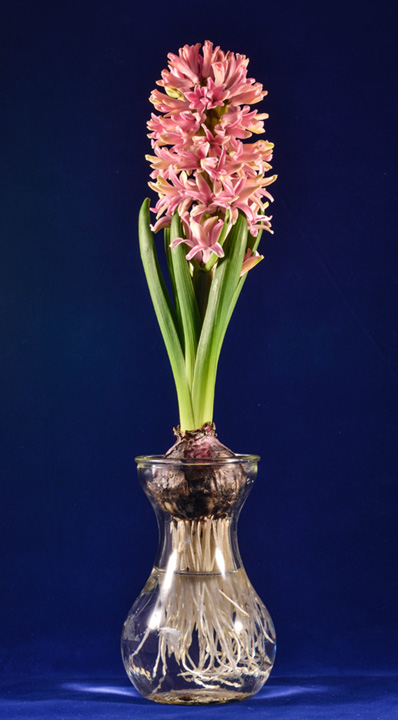
Forcing bulbs is also a way to add a little color and fragrance to the house during winter.  Several types of bulbs can easily be forced into bloom with again no maintenance.


I have always had a passion for photographing wildlife.  It has the same thrill as hunting, but without the blood, gore and recrimination of killing a living creature.  The photo above is of female Downy Woodpecker.
When the weather is really lousy there is always table-top photography to pass the time.  The above photo I have named R2D2 meets H2O. 

Oh, the joy of being retired!


Sunday, January 6, 2019

Journal January 6, 2019 - Just for fun

Just because it is winter it does not mean you have to discontinue gardening, you can always find something to grow, and somehow to grow, in the great indoors.  As for myself, I am growing zinnias, carnation and a hyacinth bulb.

The carnation is Miss Aroma and it is very fragrant, but just my luck the seed I planted produced a white flower and I would have liked some color.

The zinnia is Thumbelina but unfortunately it as no aroma.

The hyacinth does have a nice aroma and it is going to be pink.

All are being grown hydroponically one way or the other.


Monday, December 31, 2018

Journal December 31, 2018 - Killing time, waiting for spring


Seeing as there is not much gardening to do this time of year it gives me a great excuse to get outdoors and do some photography.  

Recent surgery on both eyes has returned my vision to where it was when I was in my twenties, so it is like a whole new world and I intend to take advantage of it. 

I have been itching to try my new Nikon DSLR to get familiar with the different settings and lenses but my images were out of focus, so here are some examples of what it can do now that my vision has been corrected. 

HAPPY NEW YEAR!


Tuesday, December 11, 2018

Journal December 11, 2018 - Follow-up to pervious post

I thought I would post examples of a photo that had been modified with the Nik Collection plugin HDR Efex Pro 2.

The photo above is the original photo as taken on September 30, 2018.

Below is the photo modified in Efex Pro 2 using the landscape vignette selection. 

It might be interesting to print a modified photo on a matte surface stock just for fun.
 

Sunday, December 9, 2018

Journal December 9, 2018 - Great Plugin

I would like to digress from gardening to do a post about something I found and would like to share with fellow photographers.

Recently I read something about a plugin called the Nik Collection being available for free some time ago.  I like free, so I thought I would like to try the free version and searched for it online.   It did not take long to find a site that still allowed users to download the free version.  There is a new version, but not being a professional I was happy to get the free version even though it does not have all the new bells and whistles.

https://nikcollection.dxo.com/nik-collection-2012/


The plugin was used to modify a mundane photo of the Martin Dunham reservoir in Grafton, New York.  I took an extreme approach and with a few clicks really modified the photo, to the point that it now looks like a painting from the Hudson River School Of Artists.

Of course, you don't have to be so radical when using the plugin, but it was interesting to try the different features to get a feel on how they work.


Friday, December 7, 2018

Journal December 7, 2018 - Dispel the winter gloom, grow a flower.


Winter has descended on upstate New York with a vengence!  The National Weather Service said the winter would be warmer than normal, and I say: Bring it on, soon!


Just to have a single flower this winter I am growing a Thumblina Zinnia to dispel the winter gloom.   The plant is being grown hydroponically in a recycled container.


I just love fooling Mother Nature.

Sunday, November 11, 2018

Journal November 11, 2018 - Phaelenopsis from seed, the final post


As my test plant was doing nicely I decided to deflask one more plant. Then, I saw another promising plant I just could not throw away, then another, and another and so on, until at eight I decided enough is enough. I will ask my wife to get rid of the excess plants before I have a house full of them.

All in all, I am very satisfied with this experiment.  It took a little over a year from the time I pollinated the flowers until I had seedlings.

Tuesday, October 30, 2018

Journal - October 30, 2018 - Phalaenopsis from seed success

One of the seedlings has been deflasked and planted in moist sphagnum moss to determine if they can survive out of flasks.

The seedling has been placed in a domed growing container under a small T5 6500k fluorescent lamp and will be gradually acclimated to live outside the container.


Tuesday, September 11, 2018

Journal September 11, 2018 - Dendrobium faux pas

Early in 2017, we had a speaker at the orchid society meeting and as is customary the speaker brought plants for sale. The speaker receives no fee but member plant sales are suspended if the speaker is bringing plants.

By the time I arrived all he had remaining were dendrobiums that he had hybridized himself and I bought one just to help offset his travel costs. I don't know anything about dendrobiums and never had one previously.


At the same time, I was experimenting with Keiki paste, a hormone paste that when applied to a node may cause a new plant to form. Some paste was applied to a node on the plant and I promptly forgot about it.


Last winter the plant appeared to have died, which I could not understand. There was, however, a small plant growing from the end of one of the canes. I removed and planted the tiny plant and discarded the dendrobium I had purchased.


Last month we had a Ph.D. from the American Orchid Society whose topic was, you guessed it, dendrobiums. It seems it is normal for them to drop their leaves and go dormant, so my plant was alive when I discarded it.


This week, I noticed a strange plant with the Cattleyas and picked it up to examine it. I was shocked to find it was the Keiki from the dendrobium I had discarded!
Well yeah, I goofed, but I like the new plant better than the parent plant.


Sunday, September 2, 2018

Journal September 2, 2018 - Phalaenopsis in vitro

The results of this project have been much better than I ever expected!

Wednesday, August 15, 2018

Journal August 15, 2018 Carnations in a can.

Winters in upstate New York tend to be pretty dismal, so I was casting around looking for a fragrant flower to grow hydroponically to dispel some of the winter gloom.  I was looking for something that did not take up a lot of space and would grow well hydroponically.

In my seed cache, I came across a packet of Dwarf Fragrance mix carnations from Ed Hume Seeds that I purchased years ago.  I started some seeds in a used coffee container to grow deep water culture with a wick.  I found that the container was just the right diameter to support a 3" net pot.  The media is in the 3" net pot and consists of 80% agricultural perlite,  a thin layer of coco coir holding the seeds and a thin layer of activated charcoal covering the coir.  For nutrients, I am using the same mix and strength that I use for basil, except, I have been adding .5 ml of a potent phosphate to promote flowering. 

As the plants grew it was necessary to add a few skewers to support the plants as they tend to be top heavy.  My objective is to grow flowers, not to win an award for the most attractive plant.

As I recall I tried to grow these same seeds in the greenhouse but abandoned the idea because the plant was a magnet for spider mites.

In the meantime, I have purchased seeds for a similar variety that only grows to a height of six to eight inches, which would be ideal if the flowers are not tiny also.

The plants are easy to grow and take up hardly any space so I will be growing a lot more canned carnations this winter season.  

P.S. The flowers are opening and they smell fantastic!  I am going to start another batch to keep the supply going.


Thursday, August 9, 2018

Journal August 9, 2108 - Sweet Pepper Bonanza

We are picking a lot of sweet peppers both from the greenhouse and garden.  And, for whatever reason this season we have picked more tomatoes than ever before.

That said, the recent bouts of heavy rain have caused some of the tomatoes to split in the last week or so.

The Phalaenopsis seed project is humming along nicely.  Translate that: I have nothing to do but watch them grow.

What I thought were single large corms and planted individually are turning out to be multiple corms fused together.  So, at some point in time, it will be necessary to separate the seedlings into individual plants.  That, however, is some ways off in the future.

In the meantime, I have crossed a large plant with a miniature plant and the cross has taken on the miniature plant.  There are so many buds on the large plant I am not sure that the cross has taken on that plant yet.
 

Friday, August 3, 2018

Journal August 3, 2018 - Kapia peppers are ready.

Someone and I do not recall who gave me seeds for Kapia Hungarian peppers last season.   There were only a few seeds in the packet so I did not have many to plant, perhaps six or so. 

Two plants were placed in the greenhouse and the remaining plants in the garden.  The greenhouse plants have ripe peppers and they are real beauties!

The seeds will be saved and next season I plan on planting just these peppers.  Yeah, they are that good.

"The Red Kapia is a small, tapered pepper with a brilliant lipstick-red color.

In the same family as the bell pepper, this mild 4-5 inch pepper has a distinctive sweetness. This pepper is a native of Eastern Europe and, in fact, the main flavor ingredient in Hungarian Paprika. It’s a great addition to salad, roasted or simply tossed in a quality olive oil with pasta."


Saturday, July 28, 2018

Journal July 28, 2018 - Phalaenopsis - seed starting success!!

Several of the more vigorous protocorms have been placed in individual vessels, while others remain grouped common vessels.  As I have experience in deflasking orchid seedlings I am now certain that this project will be a success.

The parent plant is back in full bloom and is magnificent.  To think that I purchased this plant last year at Aldi's for about eight dollars still boggles my mind.

The large Phalaenopsis has been crossed with a small Phalaenopsis that is almost purple, and already I can see the flower stem getting thicker which indicated pollination has taken place.
 

Sunday, July 15, 2018

Journal July 15, 2018 - Phalaenopsis protocorms starting to look like plants.


Real progress is being made now, the protocorms are developing into plants.

Monday, July 9, 2018

Journal July 9, 2018 - Phalaenopsis orchid from seed in a test tube.

No matter what happens going forward I am going to call this a success!

There is definitely a new orchid growing from this protocorm.

What a fun project!

Sunday, July 8, 2018

Journal July 8, 2018 - Phalaenopsis protocorm developeing leaves.

The process is so complicated I really did not expect to pull it off, but I wanted to learn something by trying.

I made a lot of mistakes, like putting way too many seeds in the media. They germinated but used up all of the nutrients in the media in a short period of time. I did not replate soon enough, so many of the protocorms ran out of nutrients. Still, I have a few dozen corms that appear to be forming into plants. This time when I replated the corms I only put a few in each vessel, and isolated a few to a single vessel or test tube.

Since I replated and isolated them the corms have begun to develop rapidly. In just one day the one in the photo went from just a bump on top to what appears to be a tiny leaf. 

 
Actually, I am looking forward to crossing a full size plant with a miniture in the near future and repeating the process.


It was that much fun!

Sunday, June 10, 2018

Journal June 10, 2018 - Lighting change


I look forward to checking on the progress of this project each day, it is kind of like watching an old Saturday serial movie; things are happening, but happening slowly. 

Thinking that the major contributing factor to plant growth is light, I decided to change the quality and quantity of the lighting, drastically.

Today the lighting was changed from a small compact fluorescent to a small LED grow light tuned to both vegetative and flowering spectra. The intensity has changed by a factor of 10, from 50 footcandles to 500 footcandles.


Saturday, June 2, 2018

Journal June 2, 2018


Today I "replated" almost all of the seedlings, selecting the largest darkest green seedlings for replating. Replating is literally scooping them out of the vessel and placing them on a plate then transferring them to vessels with fresh media. 

They were replated because I noticed the growth slowing down, almost to a halt. Hopefully, I have carried out the replating in time. This is the step that has the most chance of introducing contamination, so I used several vessels to lower the odds.

The slope in the media is deliberate so that the condensation runs to the low side and does not puddle and drown the seedlings.

Friday, June 1, 2018

Journal June 1, 2018 - Growing hydroponically cheap, really cheap.

My wife brought home hydroponic basil from the supermarket recently.  It was bare root in a horticube, two stalks for about six dollars.  In just a day or so it turned black and was tossed into the garbage, kiss six bucks good-bye.

To prevent any further episodes of buying hydroponic basil I told her I would grow all the basil she wanted.  Basil is about the easiest thing to grow hydroponically, so I simply rescued a suitable container from the recycle bin and set to work.

The basil is supported by expanded clay pellets and grown in a 3" netpot.  The netpot is suspended in nutrients to a level just below the rim.  Any water soluable nutrients will work, but keep the nutrients on the weak side, about quarter strength.