skip to main |
skip to sidebar
The above photo is of Spicy Greek Basil being grown hydroponically in a mason jar that was painted gray to inhibit algae. This is a no brainer method of growing, as it requires hardly any maintenance, and, have you priced basil in the market during winter?
The jar, a standard 4" net pot filled with perlite topped with a quarter inch of coir sprinkled with activated charcoal and you have a nifty little hydroponic garden, Oh, I forgot to mention a short strip of felt to act as a wick. Add the seed and fill the jar with water and a dilute solution of water and any good soluble fertilizer and you are good to go.
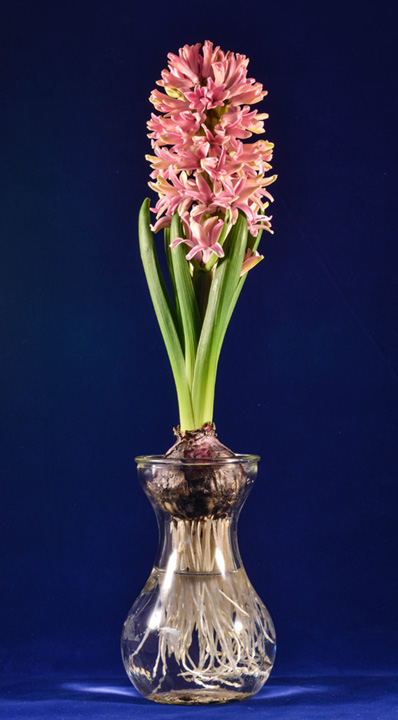
Forcing bulbs is also a way to add a little color and fragrance to the house during winter. Several types of bulbs can easily be forced into bloom with again no maintenance.
I have always had a passion for photographing wildlife. It has the same thrill as hunting, but without the blood, gore and recrimination of killing a living creature. The photo above is of female Downy Woodpecker.
When the weather is really lousy there is always table-top photography to pass the time. The above photo I have named R2D2 meets H2O.
Oh, the joy of being retired!
Just because it is winter it does not mean you have to discontinue gardening, you can always find something to grow, and somehow to grow, in the great indoors. As for myself, I am growing zinnias, carnation and a hyacinth bulb.
The carnation is Miss Aroma and it is very fragrant, but just my luck the seed I planted produced a white flower and I would have liked some color.
The zinnia is Thumbelina but unfortunately it as no aroma.
The hyacinth does have a nice aroma and it is going to be pink.
All are being grown hydroponically one way or the other.
Seeing as there is not much gardening to do this time of year it gives me a great excuse to get outdoors and do some photography.
Recent surgery on both eyes has returned my vision to where it was when I was in my twenties, so it is like a whole new world and I intend to take advantage of it.
I have been itching to try my new Nikon DSLR to get familiar with the different settings and lenses but my images were out of focus, so here are some examples of what it can do now that my vision has been corrected.
HAPPY NEW YEAR!
I thought I would post examples of a photo that had been modified with the Nik Collection plugin HDR Efex Pro 2.
The photo above is the original photo as taken on September 30, 2018.
Below is the photo modified in Efex Pro 2 using the landscape vignette selection.
It might be interesting to print a modified photo on a matte surface stock just for fun.
I would like to digress from gardening to do a post about something I found and would like to share with fellow photographers.
Recently I read something about a plugin called the Nik Collection being available for free some time ago. I like free, so I thought I would like to try the free version and searched for it online. It did not take long to find a site that still allowed users to download the free version. There is a new version, but not being a professional I was happy to get the free version even though it does not have all the new bells and whistles.
https://nikcollection.dxo.com/nik-collection-2012/
The plugin was used to modify a mundane photo of the Martin Dunham reservoir in Grafton, New York. I took an extreme approach and with a few clicks really modified the photo, to the point that it now looks like a painting from the Hudson River School Of Artists.
Of course, you don't have to be so radical when using the plugin, but it was interesting to try the different features to get a feel on how they work.
Winter has descended on upstate New York with a vengence! The National Weather Service said the winter would be warmer than normal, and I say: Bring it on, soon!
Just to have a single flower this winter I am growing a Thumblina Zinnia to dispel the winter gloom. The plant is being grown hydroponically in a recycled container.
I just love fooling Mother Nature.
As my test plant was doing nicely I decided to deflask one more plant. Then, I saw another promising plant I just could not throw away, then another, and another and so on, until at eight I decided enough is enough. I will ask my wife to get rid of the excess plants before I have a house full of them.
All in all, I am very satisfied with this experiment. It took a little over a year from the time I pollinated the flowers until I had seedlings.



 Posts
Posts


